
The rule in one paragraph
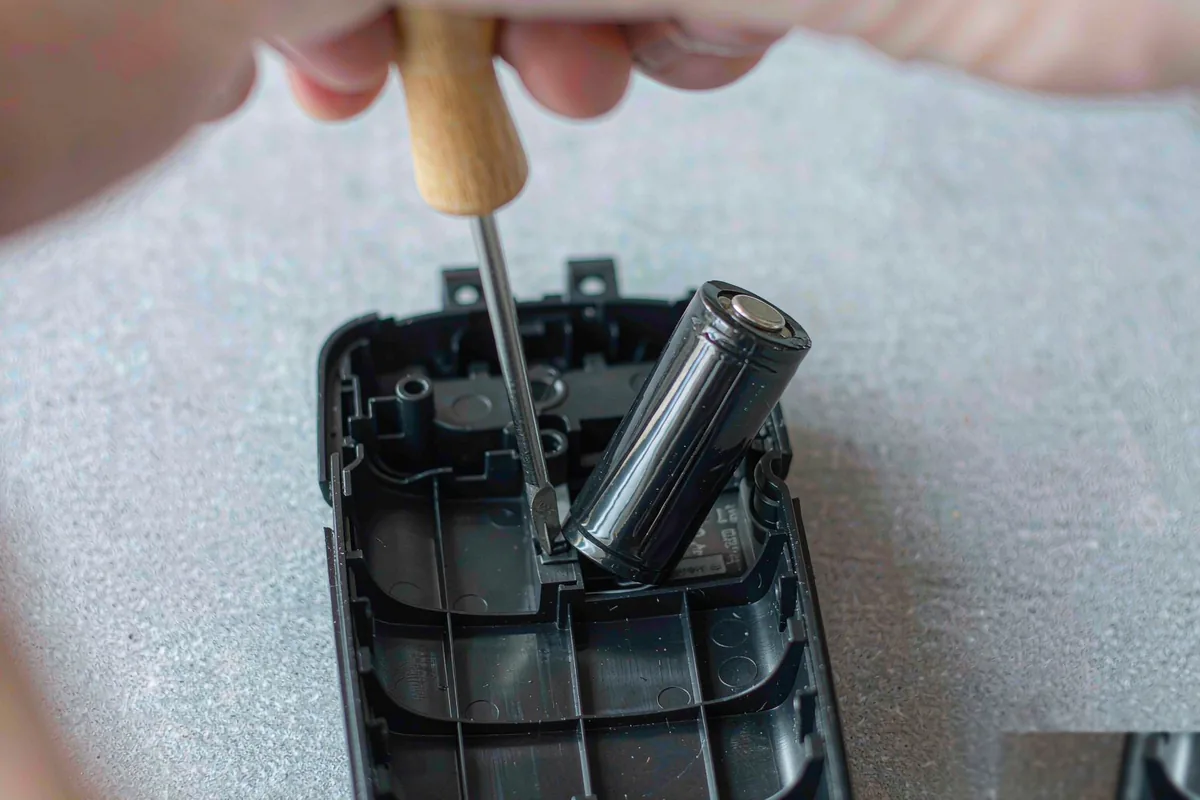
EU Regulation 2023/1542 — the EU Battery Regulation — has applied generally since 18 February 2024, but its most disruptive provision for the vape trade is Article 11: from 18 February 2027, portable batteries must be readily removable and replaceable by end users. Readily removable means removable with commercially available tools, without specialised or proprietary tools, and without applying heat, solvents or chemical action. Products must ship with instructions and safety information covering removal and replacement. For a product category built on sealed, welded, glue-closed disposable devices, this is the single biggest regulatory event on the horizon after TPD itself.
This article explains what the rule actually requires, whether it is a ban (it is not — but it is close for some designs), the timeline to plan against, and what buyers should be asking suppliers right now. For the compliance foundation, pair it with our TPD compliance basics.
What “readily removable” actually means
The Regulation sets a functional test, not a design mandate. A battery complies when an end user — not a technician — can remove and replace it:
- using commercially available tools (a standard screwdriver qualifies);
- without specialised or proprietary tools (a brand-only tool fails);
- without heat, solvents or chemicals (which rules out most glue-and-heat constructions);
- with instructions and safety information included in the box for removal, replacement and recycling.
Industry bodies including ELFAR have been explicit that this does not result in an automatic ban on sealed disposables — application depends on interpretation and national implementation. But the practical reading across the market is consistent: a fully sealed, non-serviceable disposable becomes very hard to defend against the letter of Article 11 once national market surveillance starts enforcing it.
Why disposables are in the firing line
Almost every disposable vape on the EU market today is a sealed unit: the lithium cell is welded to the PCB, bonded into a plastic shell, and never meant to be opened. That design is cheap, light and safe in transport — but it fails every limb of the removability test. Pod systems and refillable kits, by contrast, already ship batteries that slide or clip out, and most will pass with minor documentation work.
The commercial consequence: from February 2027, the compliance gap between sealed disposables and serviceable devices becomes a market-access question, not just a design preference. Buyers stocking months ahead need to know which side of that line each SKU sits on. Our EU disposables bans and retailer checklist tracks the parallel country-level restrictions — the two trends compound.
Is it a ban? The honest answer
No — and you should be suspicious of anyone selling the panic version of this story. Three reasons:
- It is a design requirement, not a prohibition. A disposable with a removable battery door, or a design the national authority accepts as readily removable, stays legal.
- National implementation varies. Market surveillance, interpretation of “readily removable”, and enforcement priority all sit with member states. Some will move fast; others will take years.
- The industry is adapting. Major manufacturers are already shipping disposable-format devices with removable battery compartments for the 2027 market.
The risk is not “all disposables vanish on 18 February 2027”. The risk is stranded stock: product that was compliant when it cleared customs but sits on a shelf when enforcement begins, or a supplier whose 2027 pipeline is still sealed-only. That is the scenario that hurts buyers.
The compliance timeline to plan against
| Date | What happens | Buyer action |
|---|---|---|
| 18 Feb 2024 | Regulation applies generally | Conformity documentation baseline |
| 2026 | Extended labelling: battery content, recycled content, separate collection symbols | Check cartons and units carry new labels |
| 18 Feb 2027 | Article 11 removability applies to portable batteries | Stock cleared and sold-through ahead; order removability-ready SKUs |
| From 2027 | Battery passport: QR code linking to battery data | Ask suppliers for passport readiness |
Layered on top are national e-waste regimes — in Germany, for example, take-back obligations under ElektroG tighten from 1 July 2026. Waste and EPR handling is part of the true cost per carton.
What buyers should ask suppliers now
The suppliers who will still be shipping in 2028 already have answers to these five questions. The ones who will disappear give vague ones:
- Which SKUs are removability-ready for 18 Feb 2027? Ask for the design roadmap in writing, per model.
- What does the removal tool requirement look like? “Any small screwdriver” is a compliant answer; “the customer sends it to us” is not.
- Are instructions and safety information included in the box? Article 11 requires them — and they must be in market languages.
- What is the battery passport plan? QR-code-linked battery data arrives from 2027; suppliers without a plan are behind.
- What happens to sealed stock bought in 2026? A serious supplier offers sell-through timelines or removability-ready alternatives instead of offloading stranded inventory.
These questions belong in a structured document request — our compliance dossier checklist covers the full set, and the supplier-vetting process in how to vet a vape supplier puts them in context.
How the assortment reshapes
Three product bets make sense ahead of 2027:
Removable-battery disposables
The format survives with a battery door — several 2026 releases already ship this way. High-capacity devices like VOZOL Vista 40K and BANG King Pulse 50K are the ones to watch for 2027-ready revisions, because their large cells make removability both easier and more commercially visible.
Pod and refillable systems
Pod systems with user-replaceable batteries already comply structurally. Buyers who build a pod line now hedge the entire regulatory scenario — see the volume economics of our 20K puffs class.
Lower-ml formats
Smaller cells are easier to make removable without bulking the device, and — as covered in our EU vape tax map — they also carry less excise duty. Regulation and tax are pushing the same direction.
Frequently asked questions
Do all vape batteries have to be removable from 18 February 2027?
Article 11 applies to portable batteries, which includes vape cells. The requirement is removability and replaceability by the end user with commercially available tools — not that the device must ship disassembled. Designs that meet the functional test stay on the market.
Can I still sell sealed disposables I bought in 2026?
This is the stranded-stock question, and the honest answer is: it depends on national implementation and enforcement dates. Some member states apply the requirement to products made available from the applicability date, which would capture stock first placed on the market after 18 Feb 2027. Sell-through planning with your supplier matters more than ever — and buying EU-warehouse stock early shortens your exposure window.
Does the rule ban disposable vapes in the EU?
No. Industry associations such as ELFAR state explicitly that the Regulation does not result in an automatic ban. But sealed-only designs face a growing compliance burden, and several EU countries are pursuing separate flavour or disposables bans on their own track.
What tools count as “commercially available”?
A standard screwdriver is the benchmark case. What fails the test: proprietary tools made by the manufacturer, tools sold only to authorised repairers, and any process involving heat guns, solvents or freezing.
What is the battery passport?
From 2027, batteries placed on the EU market carry a QR code linking to a digital record — the “battery passport” — covering composition, capacity and compliance data. For buyers it is a verification tool: scan the code and confirm what the supplier claimed.
Should I stop ordering disposables altogether?
No — disposables remain the volume driver of the EU market through 2026 and beyond. The smart play is a split: keep the 2026 disposable assortment tight and sell-through fast, and start pod/removable-format lines now. Our 45K puffs range shows how far the format still travels when it is sourced compliantly.
Order for 2027, not for 2026
February 2027 is close enough that order books are already being shaped by it. The buyers who win will stock sealed-format volume where the sell-through is fast, and lock in removability-ready SKUs before the market reprices them. estvape ships EU-warehouse stock with full documentation, and we will tell you honestly which SKUs face 2027 risk. WhatsApp +86 17324671020 or email vapevex@coze.email for the 2027-ready list (18+ only). Browse the full range at the shop.
📘 Practical guides for EU B2B vape buyers
- EU Vape Wholesale Guide — A Practical Playbook for B2B Buyers in 2026
- TPD Compliance for Vape Distributors — A 2026 Field Guide
- Vape Bulk Pricing Economics — Where Margin Actually Lives
Looking to source 200+ disposable SKUs from EU warehouse stock? Open a wholesale account · talk to sales.